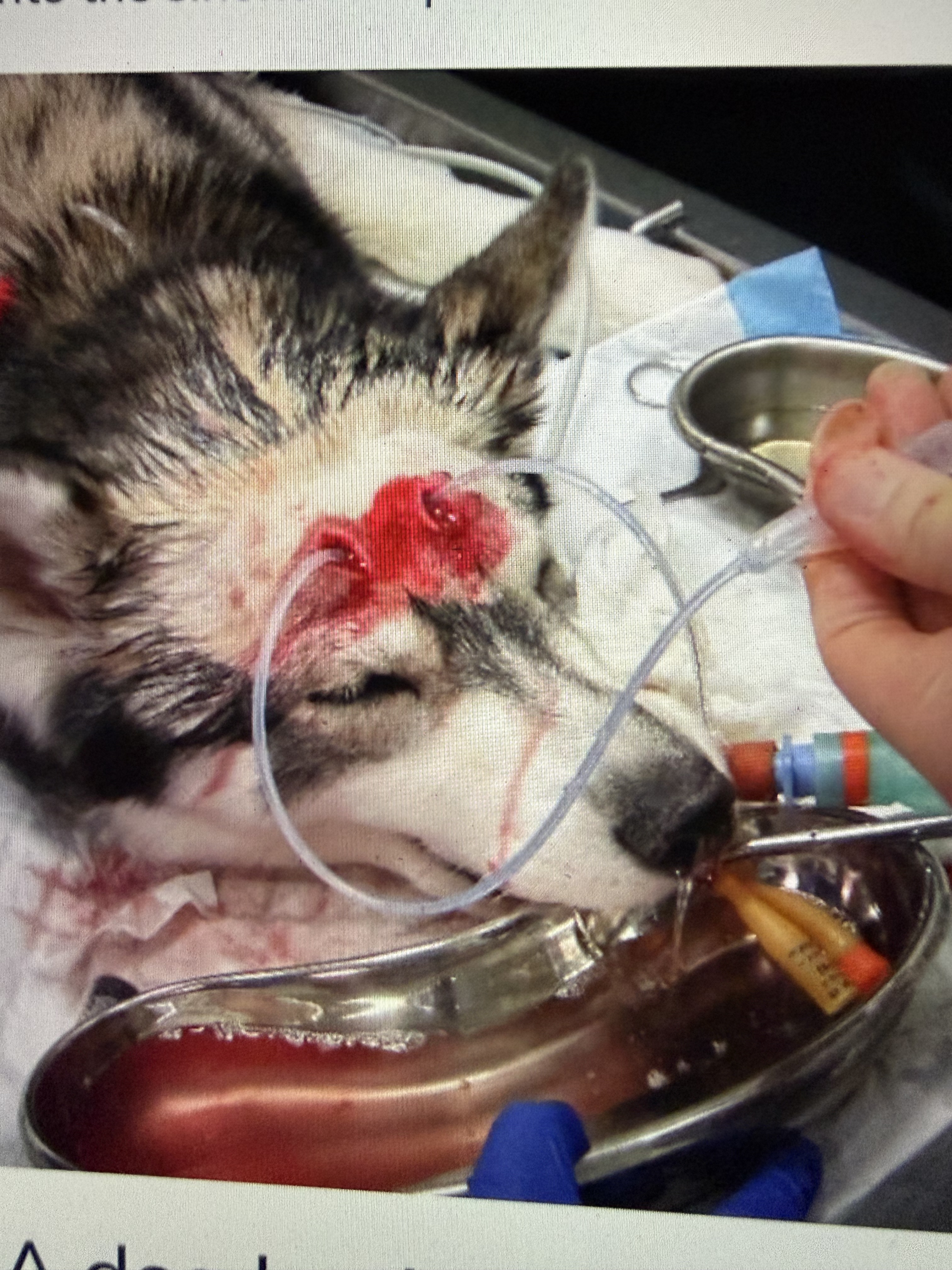
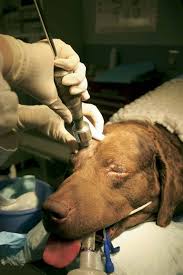
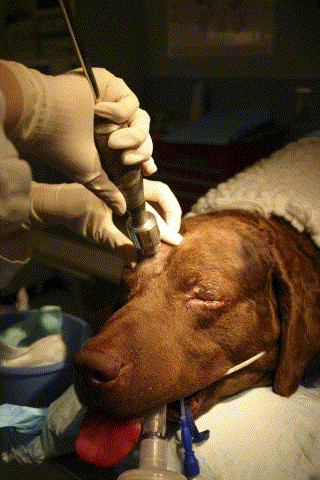
It’s that surgical procedure I mentioned in my previous post where holes are drilled in the frontal bone so anti-fungal medication can be delivered directly into the dog’s sinus cavity.
Trephination procedure.
Damn aspergillosis.
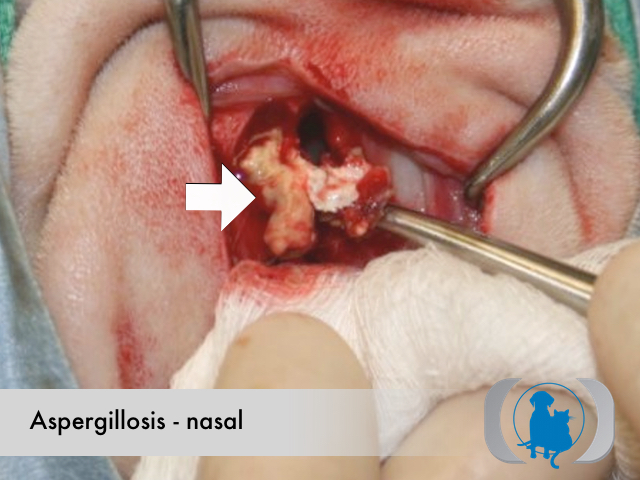
Here’s the bottom line: if the fungus destroys the cribriform plate the aspergillosis spores enter the brain and the animal dies.
Not a pretty sight.
Trephination is the best treatment because it allows veterinarians to get the anti-fungal medicine directly onto the infected areas of the sinuses.
According to AI: Canine trephination, specifically Canine Fossa Trephination (CFT), is a veterinary surgical technique where a small hole (trephine) is drilled into the canine’s maxillary sinus (cheekbone area) or frontal sinus to access and treat severe sinus infections like fungal sinusitis (Aspergillosis) or polyps, allowing for debris removal, irrigation, and topical medication delivery, offering a direct path to difficult-to-reach diseased tissue beyond standard endoscopy, though it involves surgical risk like infection or nerve damage if not done precisely.
Bailey and I visited with my local veterinarian on December 23, and discussed how best to treat her #caninefungus from #aspergillosis. Actually, he and I discussed the situation while Bailey sat and listened.
Here’s the scoop: Aspergillosis infection in dogs is common in locales where the weather is warm and moist, such as Florida, and other southern states. New England isn’t know for the flourishing of aspergillosis.
However, with the changes in temperature (can you say climate change?) our neck of the woods is becoming a breeding ground for the fungus, which is found in leaf litter, compost piles, soil, our houses…just about any where fungus can reach out and grab hold!!
Okay, you sigh, so aspergillosis is spreading its little spores everywhere. So what? Well, young or middle-aged, long-nosed breeds such as Greyhounds, Collies, German Shepherds, and Dachshunds are more often affected by nasal aspergillosis.
Labradors too.
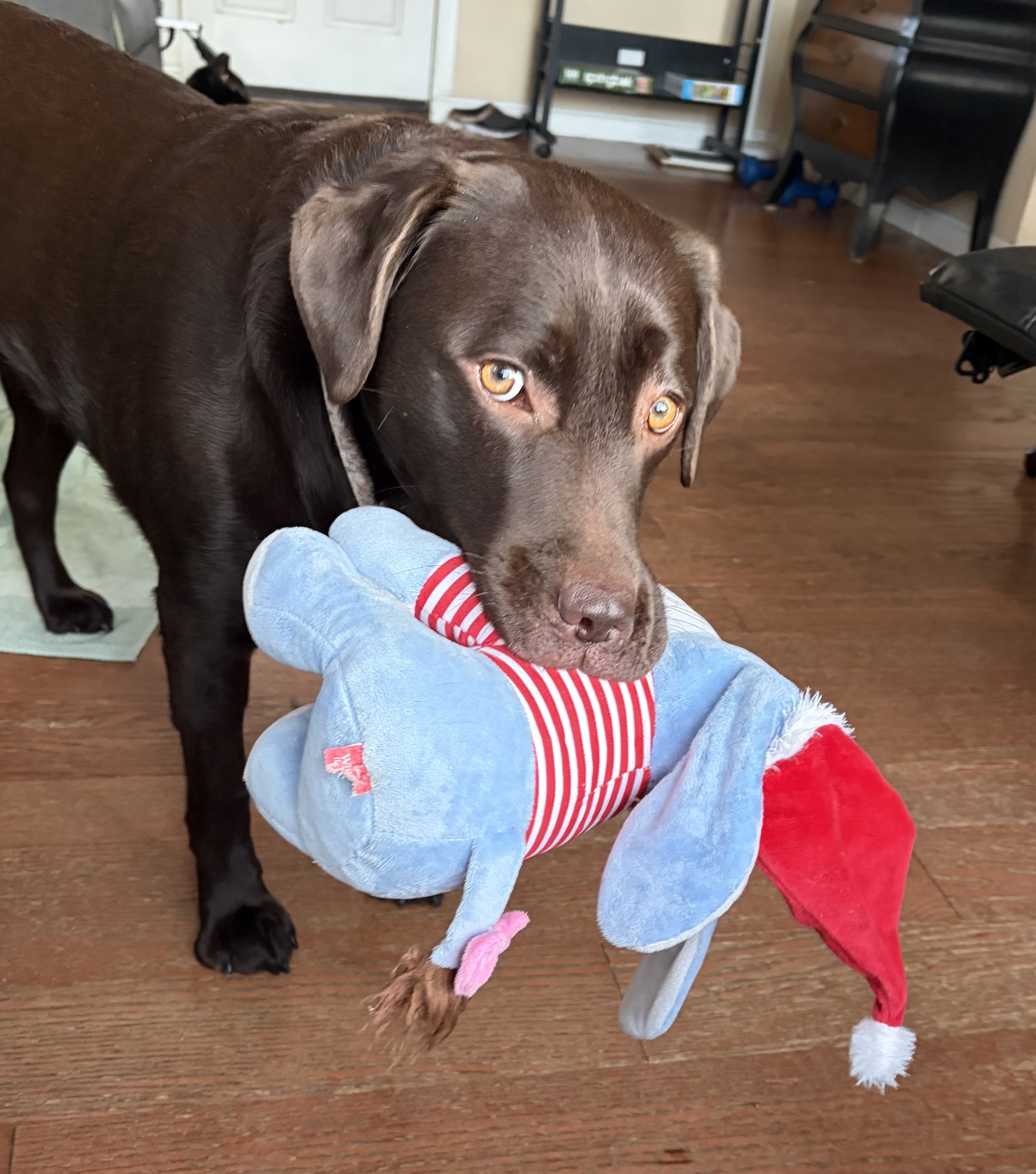
No, not racoons; their snouts are short.Bailey, December, 2025.
Couple the above information with Bailey being on apoquel. It’s used to control allergic itching and inflammation from skin allergies, but it also supresses the immune system of the user.
Ta-da, Bailey’s nasal passages held out a welcome mat for the fungus.
Do you think if I ask them to donate to my Go-Fund-Me campaign for Bailey they would say yes? Worth a try, right?
Bottom line, used short-term, apoquel handles itching really well; used long term and your pooch is in for a tough journey.
My veterinarian couldn’t say that apoquel was the reason for Bailey’s fungal infection. Bailey might have a weak immune system to begin with, or the prednisone given to her for the IMPA could have reduced her immune system.
We’ll never know why Bailey’s immune system tanked and opened her up to a plethora of fungii. Remember the ringworm infection? You don’t? Well I do.
ringworm infection
What we do know is that Bailey if not out of the woods yet in her battle with aspergillosis.
Nasal aspergillosis, which we believe is what Bailey is fighting, is a localized infection.
If not cleared by the immune system the spores, called conidia, get into the bloodstream and spread to multiple organs. This is called disseminated aspergillosis and the survival rate is not good,
Dogs with the disseminated form of aspergillosis are often terminally ill and can’t be cured and often show symptoms related to which organs the fungus has attacked. Fever, decreased appetite, weakness and weight loss, spinal pain, lack of coordination and balance, open skin sores, coughing and sneezing, swelling of the eyes, wheezing, and neurologic damage are some of the symptoms.
Sooooo, how does nasal aspergillosis get treated to improve the dog’s health, you ask, while considering donating to #baileysjourney?
Debridement (This is what Bailey had done when she had a rhinoscopy. It’s where the nasal bones are scrapped to remove the fungus.) and then anti-fungal creams are applied directly into the sinuses.
Yours for the low, low price of $5000!!! Add pneumonia for an additional $6000!!!
Other treatments of nasal aspergillosis involve trephination, the surgical practice of drilling a hole into the skull.
Oooooooooooo.
The use of oral anti-fungal medications can be used to treat canine nasal aspergillosis and are often combined with topical treatments. Downside? The dog’s liver suffers.
Okay, so where are we, meaning Bailey and I?
Well, I’m in a financial hole of about $40,000 thus far.
Please refrain from telling me to put my dog down. If you don’t own a dog then you won’t understand the connection as pet can have to one’s soul. It’s magical.
But if you can spare $10, please consider donating to #baileysjourney. Or, share about my fundraising campaign on social media. Bailey and I would be most grateful.
The shortest day of the 2025 is here (unless you live Down Under, then you’re in for long, hot days).
At 10:03 today, December 21, the Winter Solstice, aka Yule, arrived.
Morning Dove sleeping in the winter sunshine.
Yule is one of the oldest winter solstice festivals with its roots in ancient Germanic times. Themes of light, fire, and feasting were common threads within the celebrations. Although its history isn’t linked to catholicism, Yule became a name for Christmas about the 9th century. But those of use who follow the craft, we celebrate Yule without a crèche or baby in a manger. Although I do enjoy John Denver and the Muppets singing Silent Night.
The original Yule log was usually a full tree that was brought into the house and burned from the bottom with the tip of the tree sticking out into the room (a bucket of water must have been kept handy) and burned for 12 days (thus, the 12 Days of Christmas song’s origin).
The tree/log was burned as a tribute to the Sun; a beacon of hope and light when people faced the darkest days of the year. Come spring the ashes were used as fertilizer.
Gathering the Yule Log.
For Wiccans, Yule is the second sabbat of the Wheel of the Year, celebrated with rituals to welcome the return of the light as the length of daylight increases.
Decorating a Yule Log is a popular ritual for many pagans. All one needs are some evergreen sprigs to represent life, winter berries for warmth, and candles for light, and a glue gun, for, well, glue. Oh, and matches. And pinecones if you’d like.
Yule Log Decoration
Since I have cats who chew on anything green, my Yule decorations are the spent flower heads in my gardens, providing seeds for the birds during the harsh winter months.
For those of you in the northern hemisphere, how will you celebrate the shortest day of the year? Here are some traditional activities: share a meal with loved ones, burn candles, sing, dance, scatter birdseed, reflect, write intentions for the coming months, or meditate. If there’s snow on the ground, going for a walk in the woods is always fun. Plus the snow keeps ticks at bay.
Pexels.com
On my best day I never looked as pretty. Damn, why didn’t I own a pink coat?
Whatever you decide to do today, I hope its wonderful.
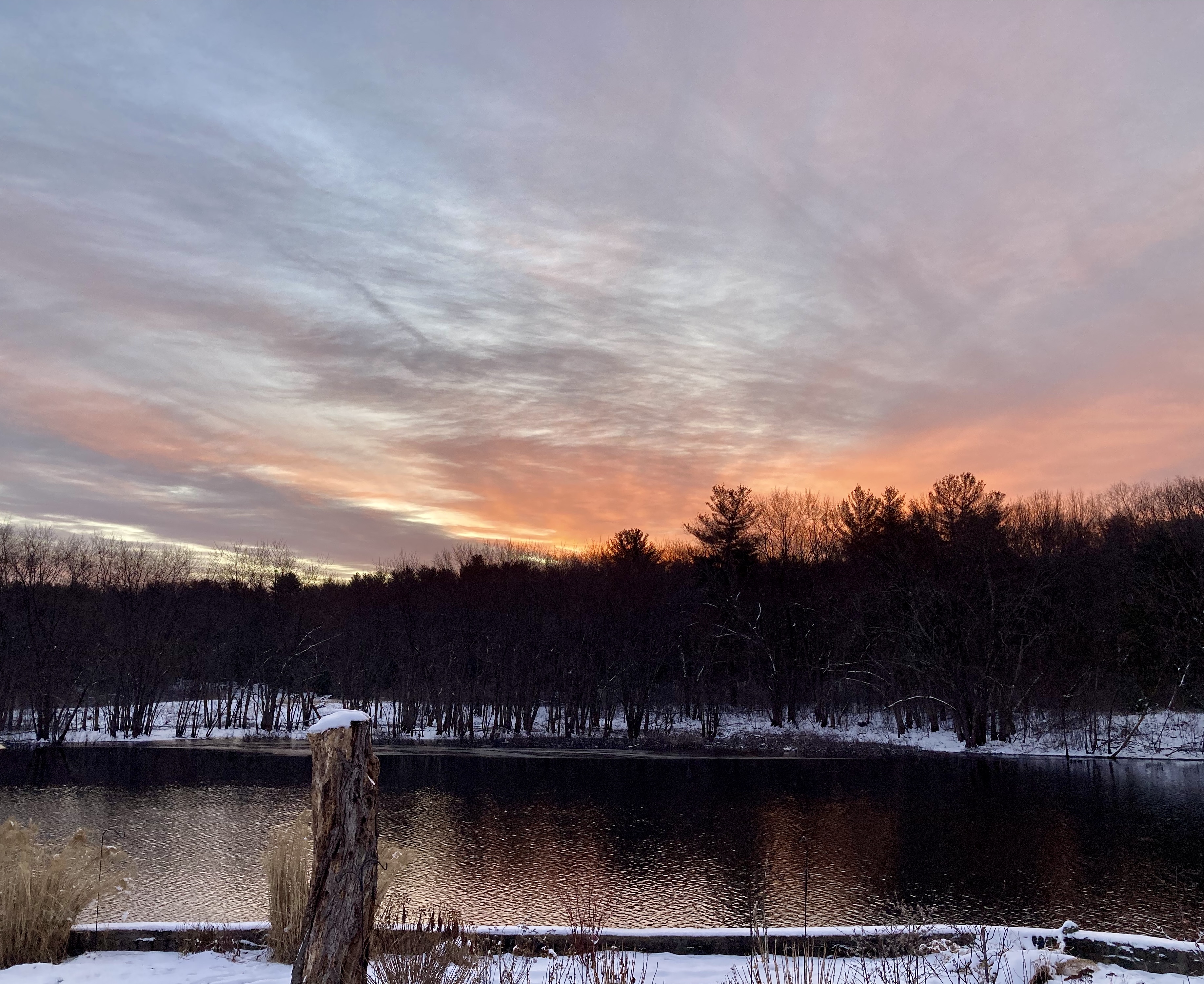
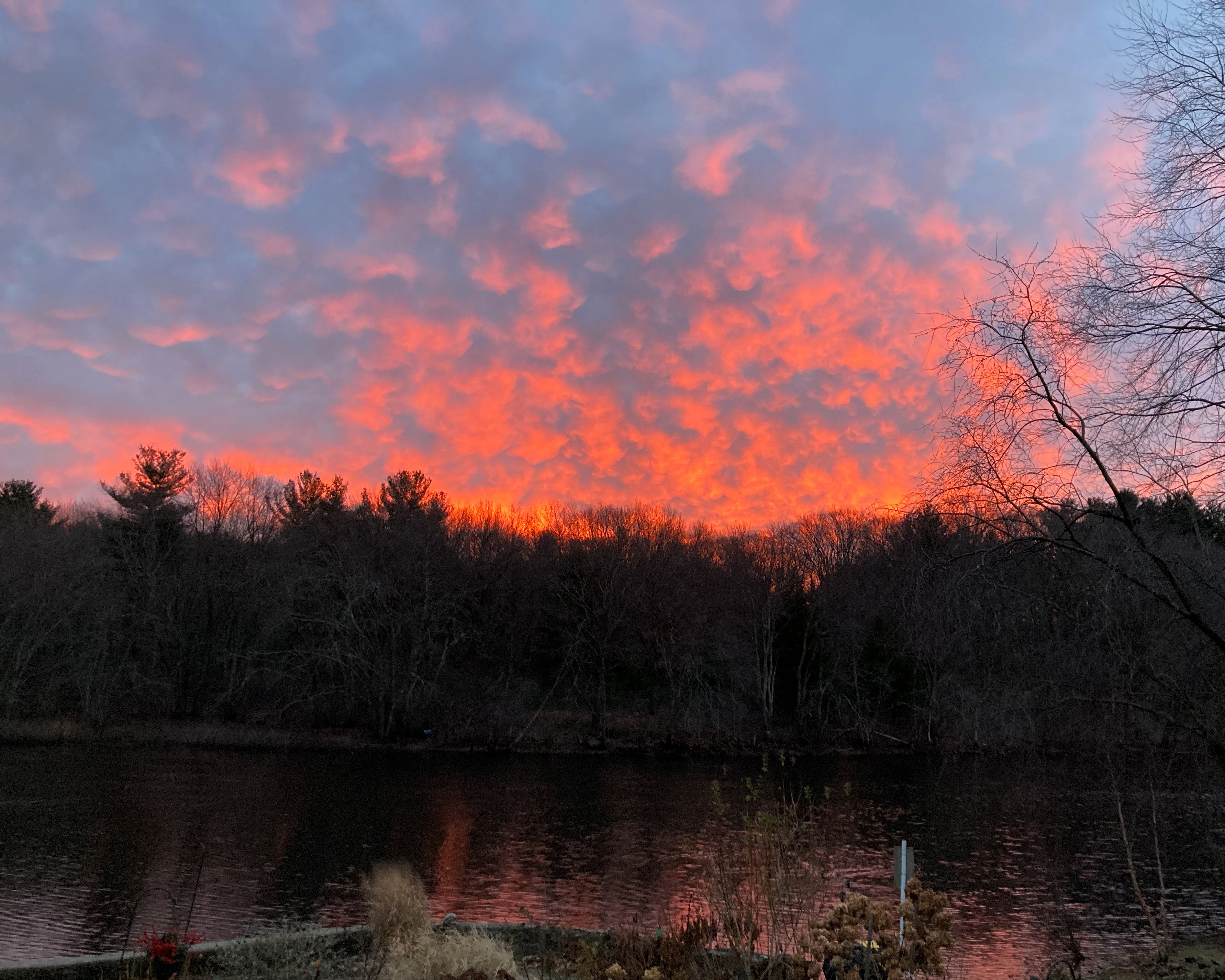
Sunrise over the Concord River
May the longest night and the shortest day bring rest to your mind & soul.

As the cycle of light slowly increases, embrace the magic that the darkness bears.

May you find peace, and live with ease and comfort.
This is a real fungus that infects insects and turns them into zombie insects. No, it doesn’t infect humans, thus far, but one never knows.
Now, I can hear you shouting; ‘Okay, River Lady, here you go with another outlandish story about living on the Concord River.’
Not so. I’m just starting this post by making a comparison between the real zombie-like fungus the game is based on and the fungus that has infected my dog’s nasal passages. After all, life does imitate art.
No, my dog hasn’t turned into a zombie but, in my humble opinion, the fungus creating crusty layers of plaster-like plaque in her sinuses and nasal passages is as irritating as any zombie infestation could be.
Fungus plaque in a dog’s nasal passageway.
Here’s the story: When Bailey was bitten by two ticks back in summer of 2024 she developed an autoimmune condition called IMPA, which stands for Immune-Mediated Polyarthritis, ‘a painful condition where the immune system mistakenly attacks multiple joints, causing inflammation, swelling, stiffness, lameness, fever, and lethargy.’ (Thank you, AI)
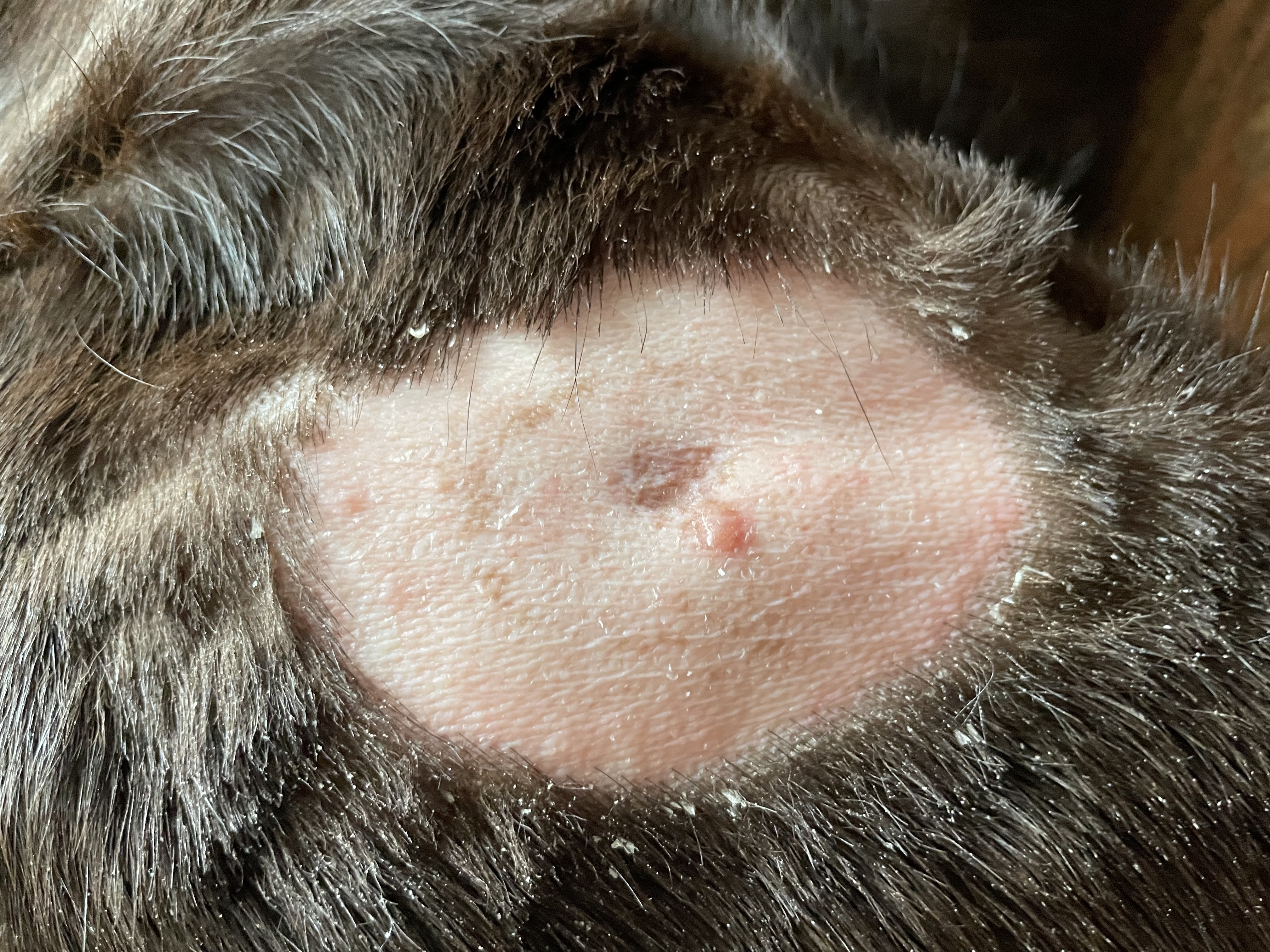
Those tick bites: one shown here on her shoulder…
Bailey’s tick bite.
ultimately resulted in several nights in intensive care (for Bailey, not me) …
Bailey, at the Massachusetts Veterinary Referral Hospital, November 2024
a damaged liver (again for Bailey), a shattered molar (yup, Bailey), ring worm (Bailey), (and tons of medication (for both Bailey and me. Anxiety rules).
One of the medications Bailey took copious amounts of was prednisone. Ah, prednisone, so potent and so damaging to the body. Cue liver issues and a shattered molar.
Bailey seemed to heal and I did my due-diligence of making payments on the $32,000 in vet bills. Sigh, no trip to Italy for me.
I type ‘seemed’ to heal because the fungus Aspergillosis had yet to rear its crusty, fungal head.
Until now.
Bailey labored breathing.
When an immune system becomes compromised, this nasty fungus sinks its little fungal spores into the nasal passages of dogs, cats, and humans, too. In dogs it’s called Dog Nose Fungus.
‘Dog nose fungus” usually refers to a serious infection in a dog’s nasal passages, causing yellow and bloody discharge, sneezing, pain, and facial swelling, and deterioration of the delicate bones in the nasal passages, especially in long-nosed breeds.’ (Again, thank you AI)
Hope you haven’t eaten recently.
Long, miserable story later and Bailey ended up at Mass Vet Hospital again for a rhinoscopy. Hey, AI, you’re up: ‘ Rhinoscopy in dogs is a specialized endoscopic procedure using a tiny camera to see inside the nasal passages and sinuses, helping vets find causes for chronic discharge, bleeding, or sneezing by identifying tumors, fungal infections (like aspergillosis), or foreign objects, often combined with CT scans and allowing for guided biopsies for accurate diagnosis and treatment. Performed under general anesthesia, it’s a key tool for diagnosing nasal diseases, removing obstructions, and collecting samples for analysis, with most dogs recovering quickly.’
The procedure went well but the doctor wasn’t hopeful she had gotten all the fungus. Bailey might need one or two more scrapings. Or, as with some dogs, the medical team might have to enter the nasal area via the temporal bone.
Okay, breathe, Cynthia, breathe. The thought of my baby going through that is overwhelming to me. But, we’ll get through it.
So, Bailey is home and on more pills, including antibiotics for pneumonia. Oh, had I failed to mention she developed pneumonia and spent a few nights in intensive care? Well, she did…and did.
Bailey, Sam, and Froggy
Now comes the pitch. Ahem.
This last round of medical work cost over $12,000, bringing my total debt past $40,000. And more procedures loom. Soooooooo, I’m asking you to post this Go-Fund-Me link to your FaceBook page, Instagram page, or any other page, to help me raise the money to cover the costs associated with treating Bailey.
70 years ago a baby was born to Francis and Harry Gonnella, and the world was never the same.
Ha! I challenge you to decide which part of the above statment is false and which is true.
Today IS my birthday, and I’m celebrating it by sitting in the waiting room of the Massachusetts Veterinary Referral Hospital in Woburn.
Guess which dog is the reason for my being here?
Yup, Bailey.
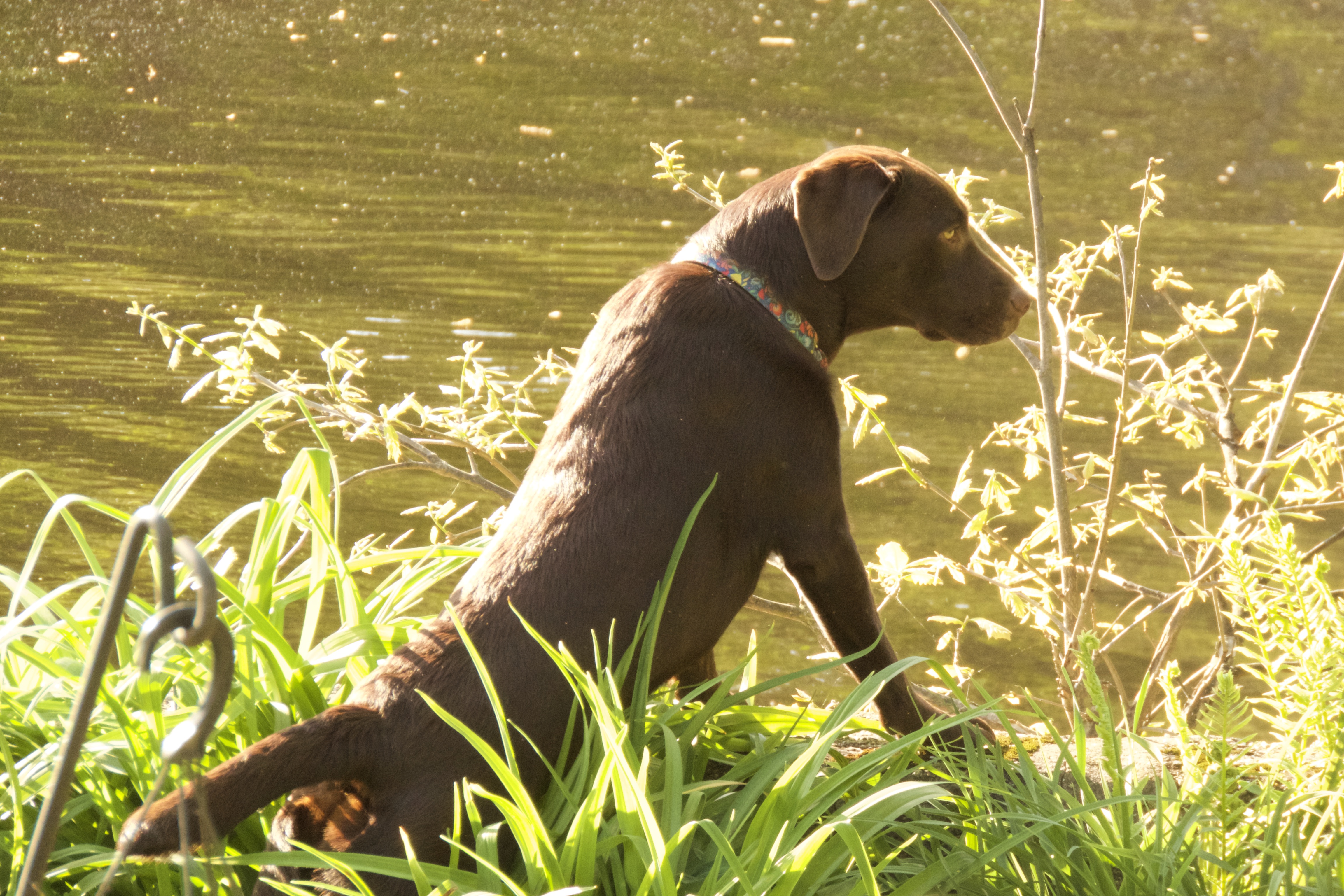
Bailey, checking out the river.
Why not? Last year I sat here for her IMPA affliction and today…well, I have no idea what is wrong with her. She is having trouble breathing, her left nostril and left eye are discharging a yellow goo, and she yelps if anything touches the left side of her face. Also, she can’t open her jaw that well.
I took her to my vet three weeks ago and he couldn’t find anything immediately wrong so we started her on a course of antibiotics, which did nada.
So today she is scheduled for a rhinoscopy, ‘where a veterinarian uses a tiny camera (rhinoscope) to visually examine the inside of the nose and sinuses for issues like chronic discharge, sneezing, bleeding, or foreign objects, allowing for magnified views, fluid flushing, and even biopsies to diagnose infections, tumors, or autoimmune conditions, providing a detailed look beyond X-rays.’ (Thank you, AI)
Poor Bailey. 🤕
And Happy Birthday to me. Stay tuned for a new post about getting old. Sigh.
I think I’ve posted this topic before but I’m old and my mind isn’t as sharp as it was. So, here it is again: I fell down my steps.
Not a ton of steps, just seven. Seven hard steps.
No, I’m not suffering from NPH again. I’m not dizzy. The ground is not tilting.
I’m just…for lack of a better word…stupid.
I have two banisters but do I use them? Nooooooooo. I have to carry a pitcher of water in one hand and a bag of birdseed in the other and step onto the frozen deck like it’s summertime. La-dee-dee.
Oh oh!
It was 6:30 in the morning with a temperature of 22 degrees.I took a hardy step onto the top of the deck and whoops! baboom-baboom-baboom-baboom.
My final destination was the bottom of the steps, drenched in water and spitting out birdseed.
Inventory time as I lay there in a dazed WTF moment.
I hit the back of my head, shoulders, wrist, and that useless bone – the coccyx. Seriously, why do humans need the coccyx?
So, once again I gave myself a mild concussion (ahhh, memories of when I tripped over the retaining block and knocked myself out – sigh).
My neck is fine and the nausea and headaches have passed but I may have broken my coccyx (I repeat, it’s a useless set of bones) and I’ve bruised the heck out of my backside.
My sister, Dyan, passed six year ago on November 23, 2019. The reason for her death was the relentless pursuit of her health by ovarian cancer.
Dyan was my best friend, my companion, and my cheerleader. Without her I wouldn’t have survived the abuse I suffered as a young girl, nor would I have had the inner strength to become the woman I am today. She taught me how to love, lose, and find joy in each day.
Was she perfect? Far from it. But she was mine.
This time of year, when I stand on my front porch, I see a star shining bright in the eastern sky and I know she is with me. Her laughter rings through the night sky and wraps itself around my heart.
To honor her passing I wrote this haiku, entitled My Star
I hear you calling
a bright star...my immortal
night is when you sing
I will admit no one is going to give me an award for my prose, but no matter–my sister hears my words.
Why do I have to turn my clocks back? What is the method to this madness that each year I must gain an hour to only lose it in the spring? Argh!!!
According to AI from a Google search, “We turn the clocks back to return to standard time at the end of Daylight Saving Time (DST), a practice designed to make better use of natural daylight. The original goals were to conserve energy and to give people more daylight in the evenings during the summer months, though the energy savings are less significant today. Turning the clocks back restores the hour of daylight to the mornings during the winter months.”
Here’s a bit more: “The practice of “going back” and “springing forward” is a result of Daylight Saving Time (DST), which originated in the early 1900s as an energy conservation measure during World War I. Benjamin Franklin first joked about the idea in 1784, but Germany was the first country to implement a version of DST in 1916 to save fuel. The United States adopted it in 1918 but repealed it the following year; it was reinstated nationwide in 1966 by the Uniform Time Act.”
My advice, time to repeal it again.
I’d ask Trump to take care of this but he’s too busy destroying democracy to be bothered with Daylight Savings Time.
Damn stupidity if you ask me.
And yes, I’m cranky. All this back and forth isn’t good for an old lady with hydrocephalus.
Anyway, I need to go tend to my clocks. What time is it anyway?
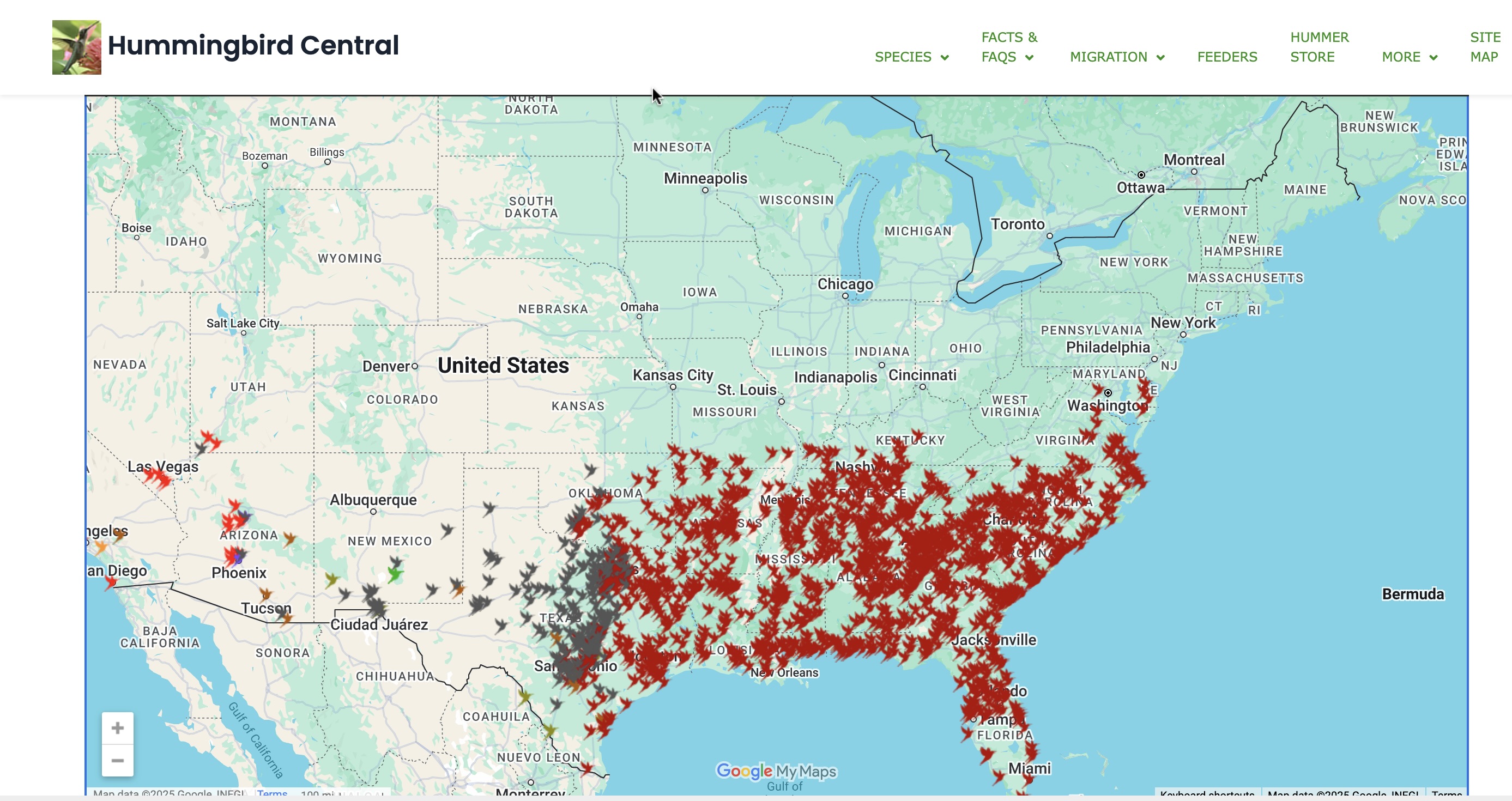
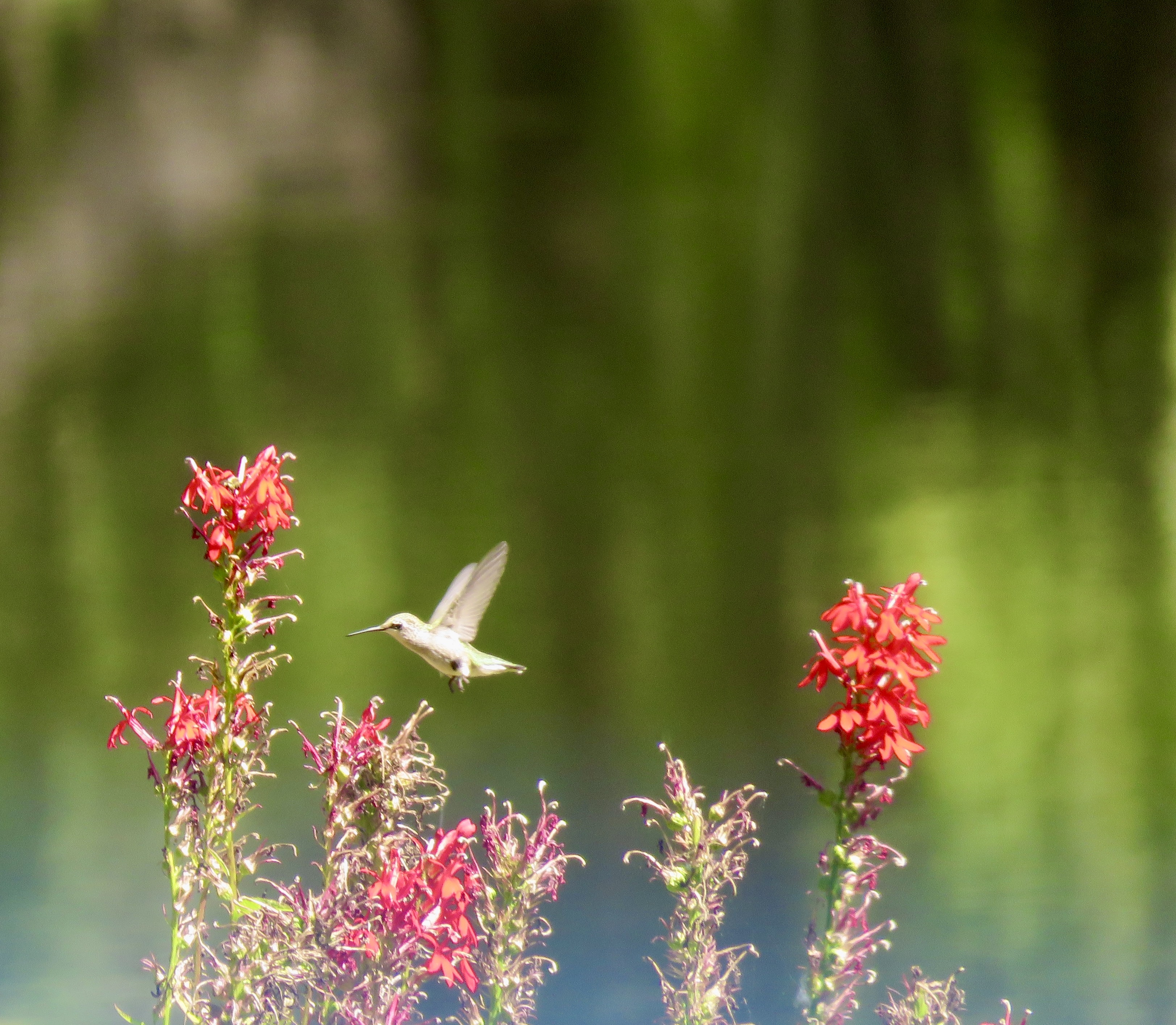
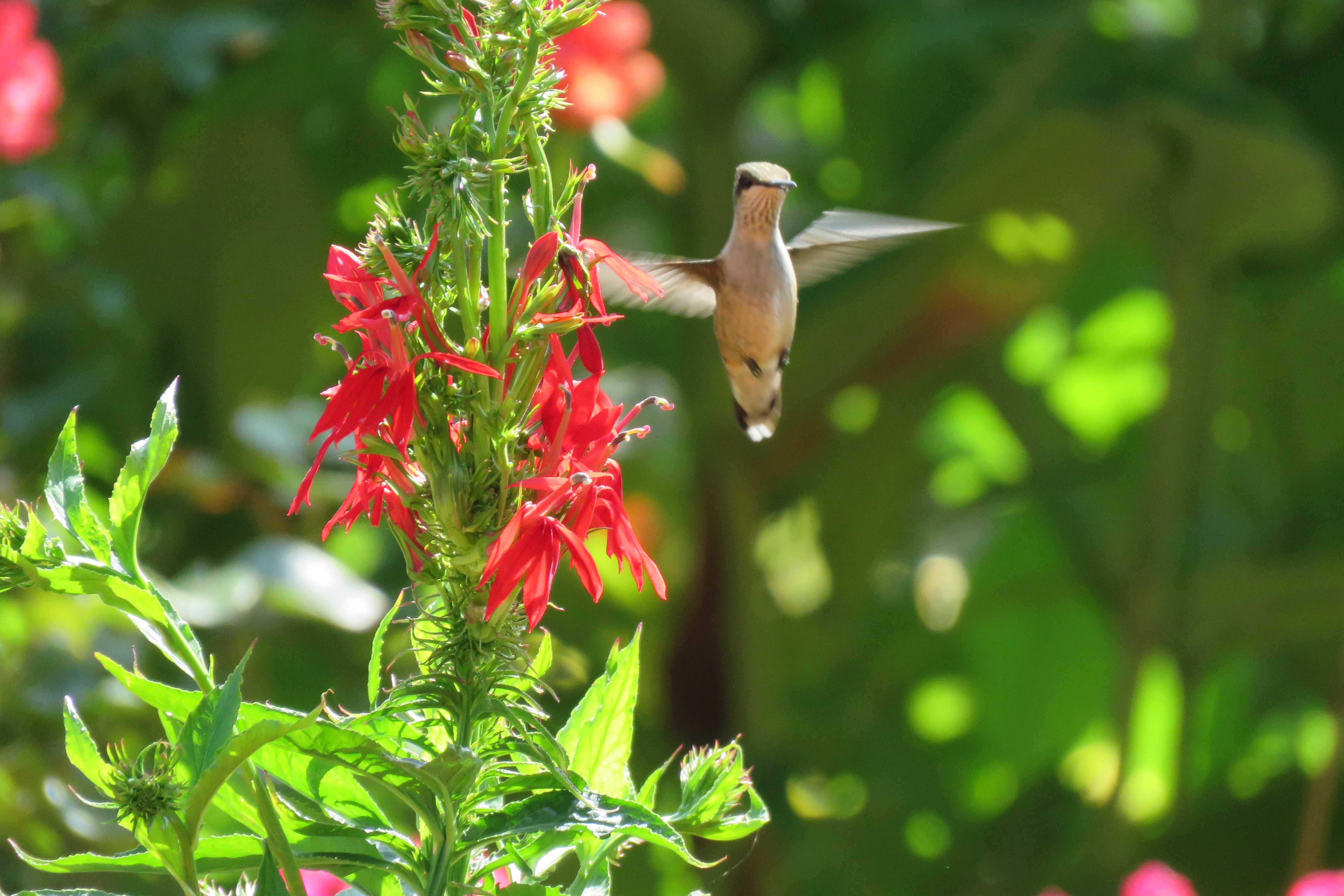
I know my flowers and nectar fortified these jewels of nature for their long trip. Goodness, Ruby-throated hummingbirds on the East Coast undertake a migration flight of about 500 miles!
My cardinal flowers are still blooming so I’ll have a few stragglers flying by for a to-go snack.
And to my readers, please keep your nectar feeders up through October, unless you have flowers. Then you can relax and let Mother Nature feed our traveling friends.
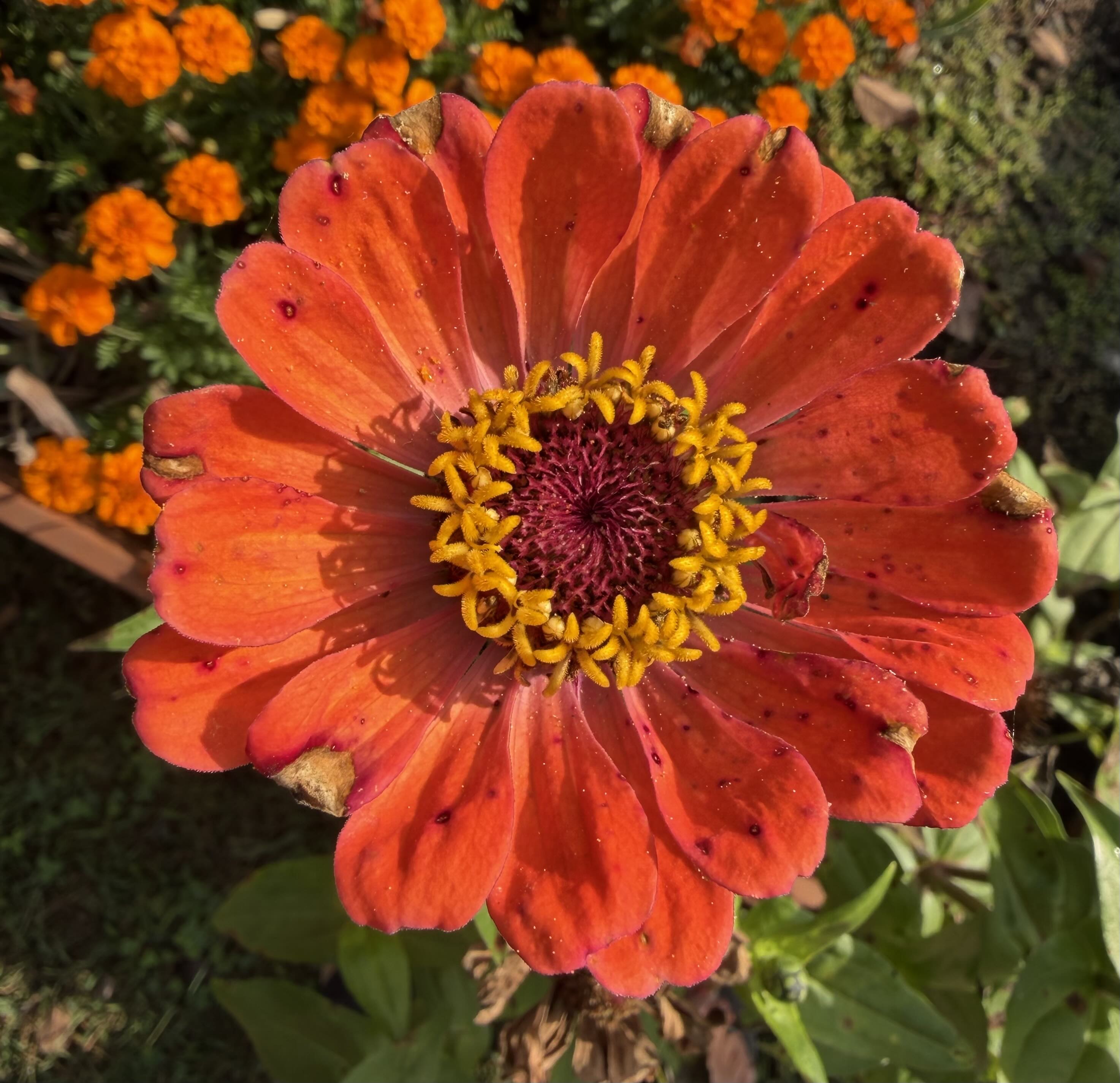
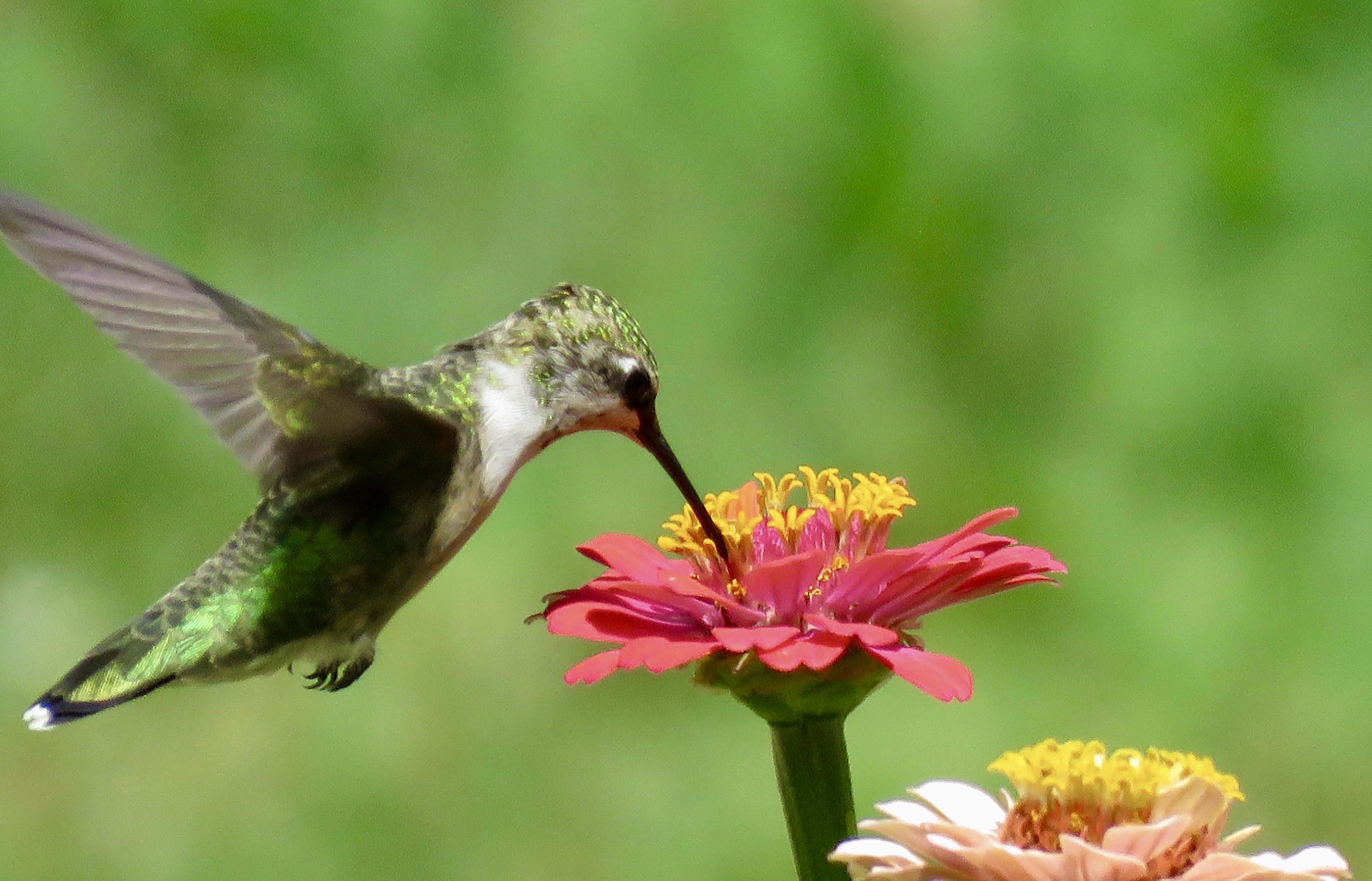
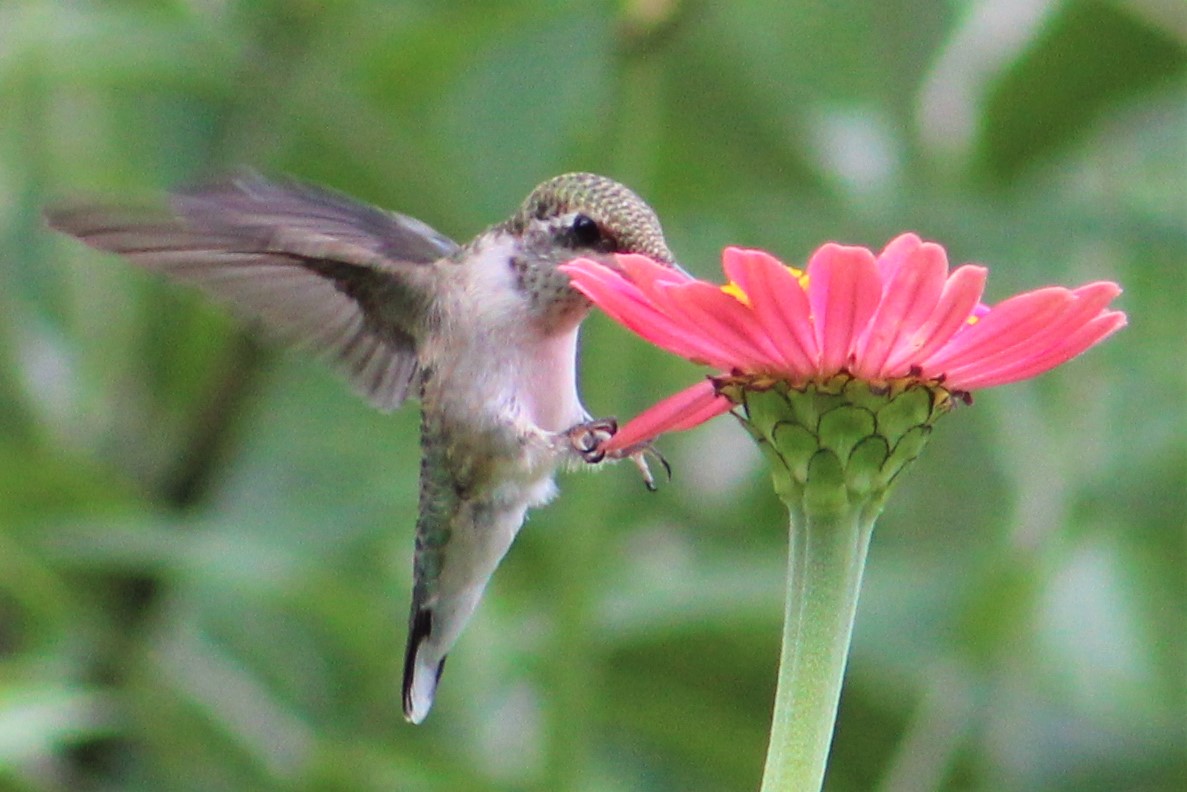
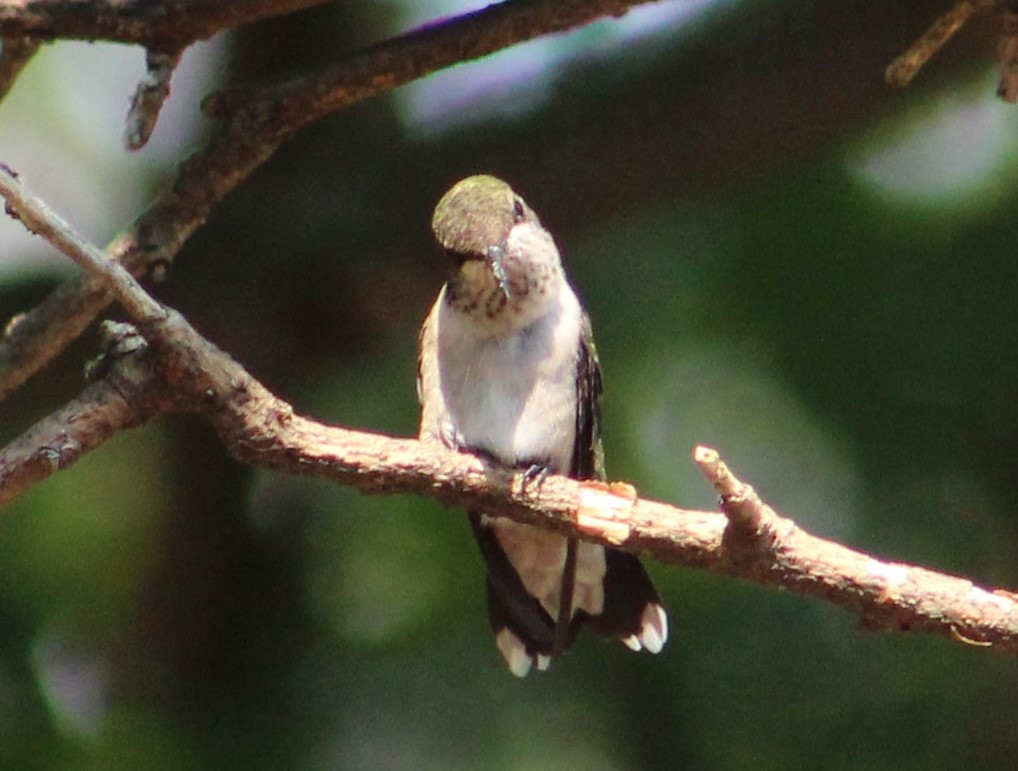
Zinnia, a hummingbird favorite.Female Ruby-throated hummingbird on a Zinnia.Juvenile Ruby-throated hummingbird on a Zinnia.
So that’s it for summer 2025 and my hummingbirds.
Stay safe little ones, and goddess willing, I’ll see you in the spring.
Last day of summer, 2025. And what a hot, muggy, buggy, did I mention hot? summer it was.
I feel I can safely type: I MADE IT!
Yes, true, I didn’t make it yet. I still have to get through tonight and the first half of tomorrow, Monday, September 22, (2:19 PM to be exact) but, hey, we’re splitting hairs here.
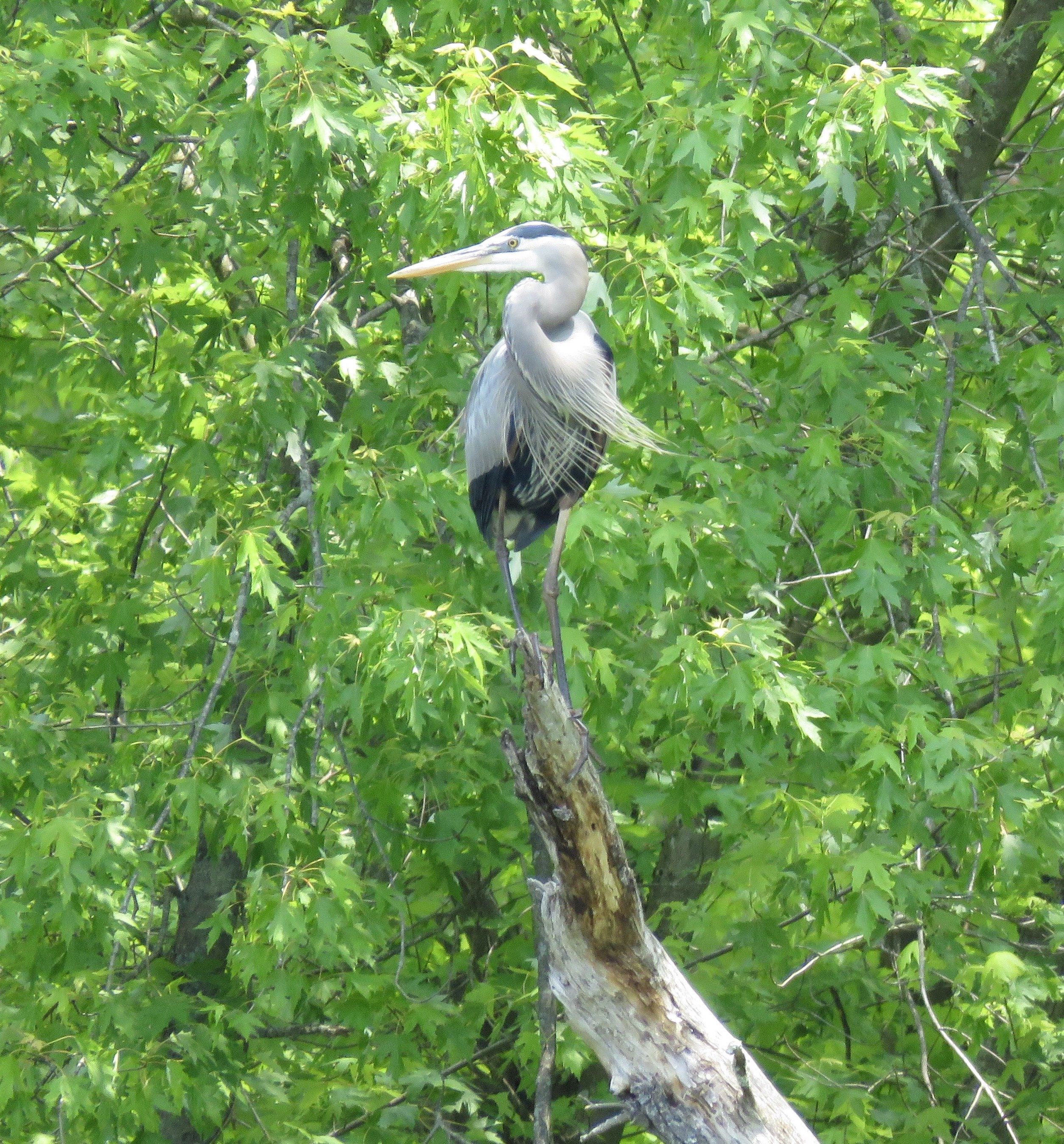
Great Blue Heron
So let’s take a look back at some of the blessings that came my way.
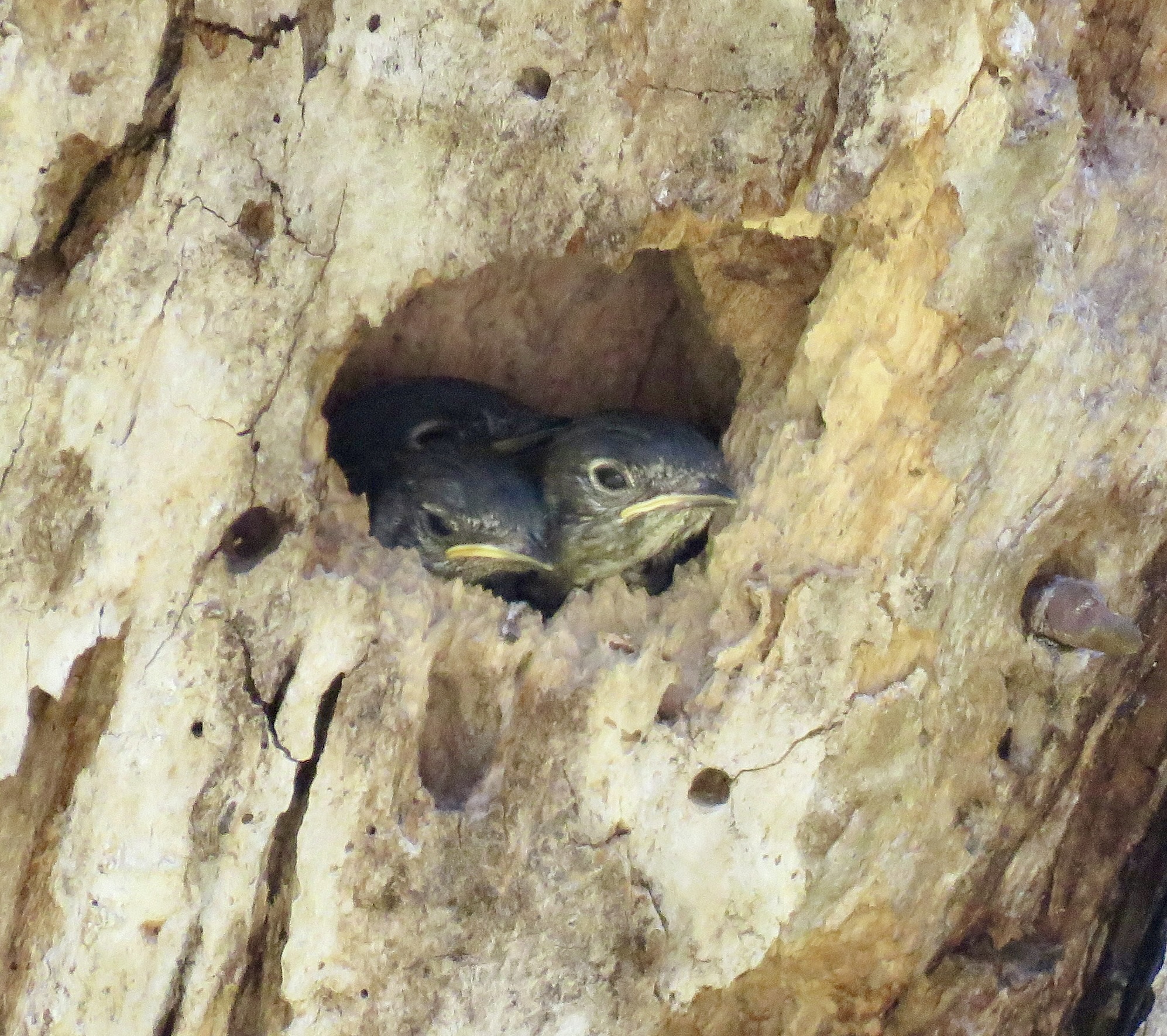
I got to watch baby Eastern bluebirds fledge from their nest.
Young Eastern bluebirds
The Baltimore Oriole chose my yard for his territory.
Baltimore Oriole
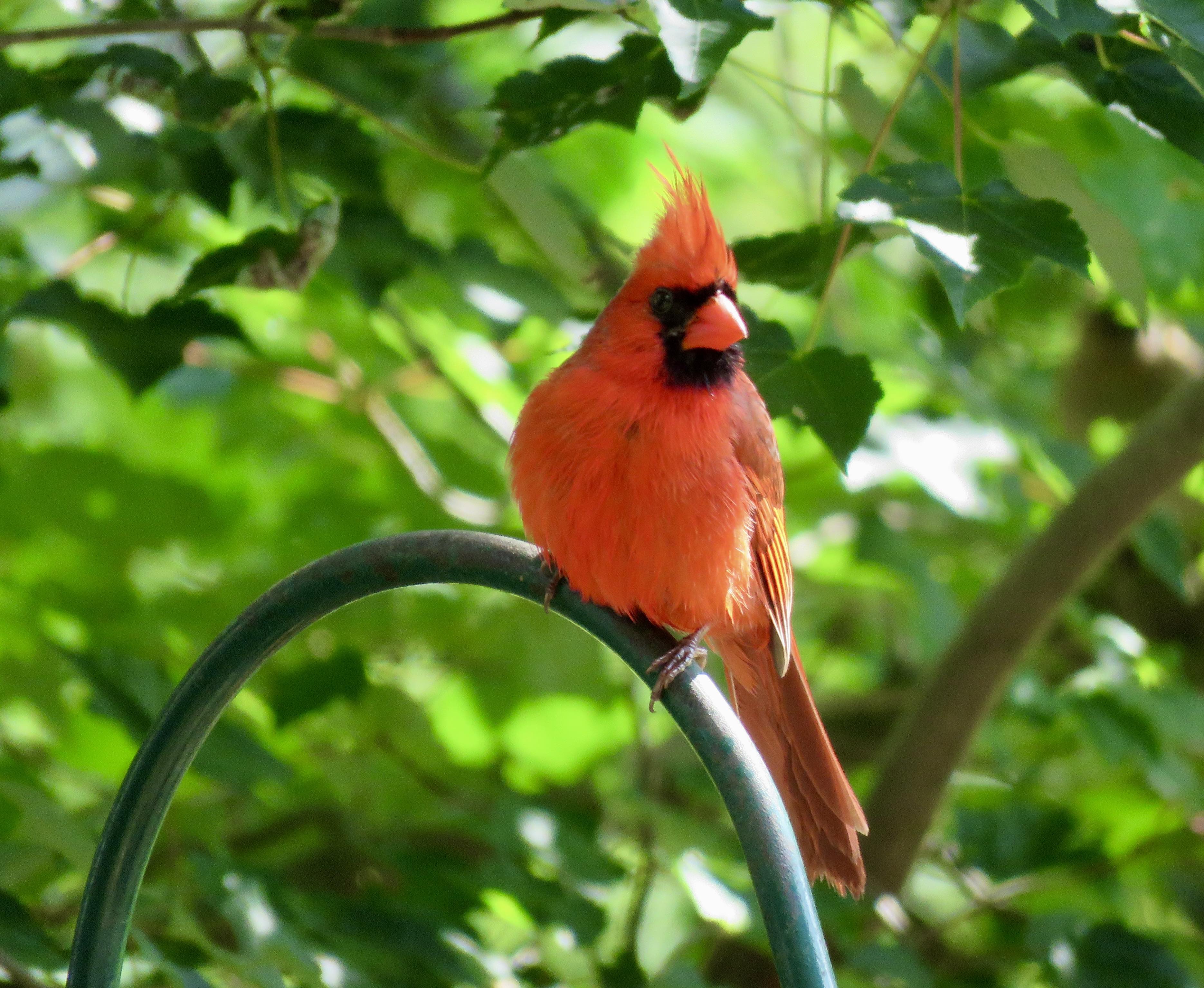
My Northern Cardinal sang his sweet song every morning.
Northern Cardinal
A family of deer visited the opposite shore of the river on many a morning.
The Ruby-throated Hummingbirds kept me company while I worked in the gardens.
Tender mercies were mine and despite the muggy, buggy, did I mention hot? weather, I have a full heart and peaceful soul.














 concordriverlady.com